
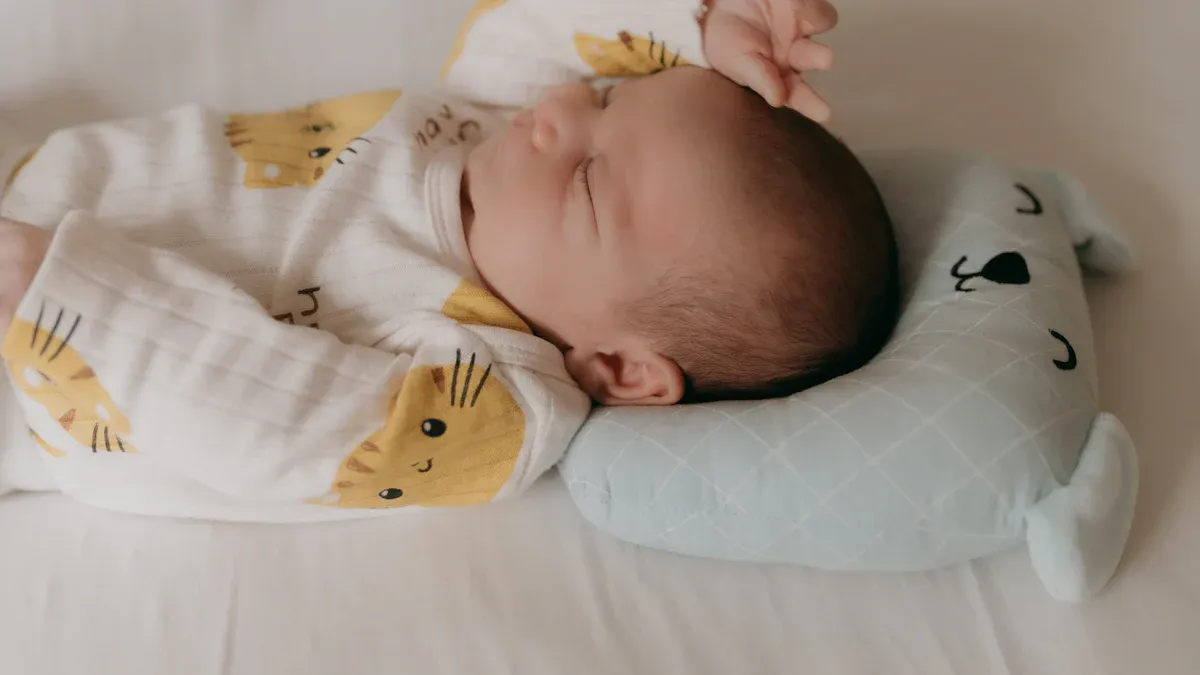
During the process of caring for newborns, many parents encounter products like infant head pillows. Common claims in the market suggest that these pillows can help babies sleep more soundly and prevent flat head syndrome or plagiocephaly. However, many parents lack clear guidance on whether infants truly need pillows and when it's appropriate to use them.
Do Babies Really Need Pillows for Their Heads
Considering the physical development of infants, babies from birth to around six months old do not yet have a pronounced physiological curve in their cervical spine; their head and back are essentially on the same level when lying flat. This is why medical professionals generally believe that infants at this stage do not need extra head support during sleep. On the contrary, using a pillow too early may alter the natural position of the head and neck, potentially causing unnecessary problems for cervical spine development.
As babies grow older, they gradually learn to roll over, lift their heads, and sit up, and their neck muscles become stronger. Some parents begin to consider using a head pillow for their babies at this stage. However, from a professional perspective, even between six months and one year old, most healthy infants still do not need to use a pillow regularly. Whether or not to use a pillow should be based more on individual development rather than following general consumer trends.
Safer Choices for Parents
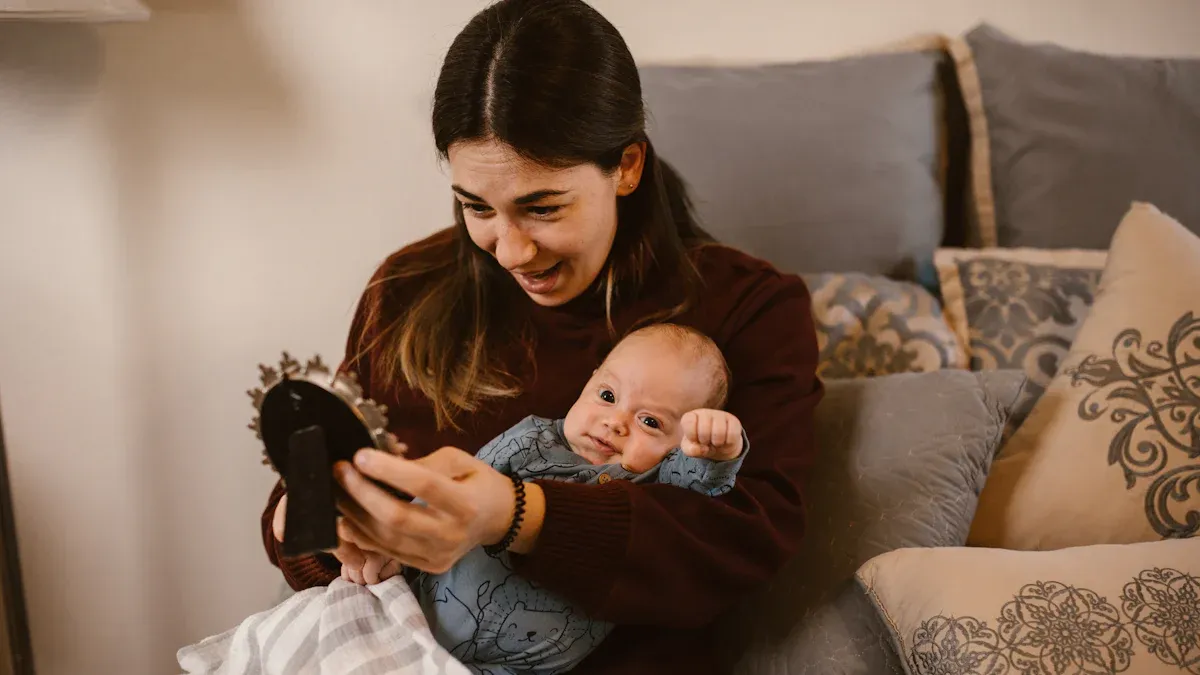
Alternatives to Infant Head Pillows
You want to keep your baby’s head safe. Pediatricians suggest safer ways that do not add risk. You can give your baby tummy time and hold them often. Some parents use the Babyfi Infant Hollow Headrest, which spreads pressure on the head. Physical therapy can help with positional plagiocephaly. Experts say to stay away from unsafe products. Keep pillows and soft things out of your baby’s crib. You can help your baby’s head shape by changing their position during play and sleep. These steps help your baby’s head grow well and lower the chance of positional plagiocephaly.
-
Tummy time
-
Holding your baby often
-
Babyfi Infant Hollow Headrest
-
Physical therapy
Tummy Time and Repositioning
Tummy time helps your baby’s head grow right. It can stop positional plagiocephaly. Start with short tummy time, about 3-5 minutes, a few days after birth. By two months, try for 15-30 minutes each day, split into small sessions. By three months, work up to one hour daily. Tummy time makes your baby’s core and hand muscles stronger. It also helps your baby turn their head. Your baby learns to control their head and gets ready to crawl. Repositioning helps too. Change your baby’s head spot in the crib and during play. Studies show repositioning therapy works for positional plagiocephaly. You can help your baby’s head shape by doing these things.
-
Start tummy time early
-
Add more tummy time as your baby grows
-
Change head spot in the crib
-
Use repositioning while playing
What If You’ve Used an Infant Head Pillow?
If you used an infant head pillow, watch your baby closely. Experts say to always watch your baby and make a safe play space. Take the pillow out of the crib to lower risk. Talk to your pediatrician if you worry about your baby’s head shape or positional plagiocephaly. Do not try home treatments without asking your doctor. Your doctor may check for craniosynostosis and make a plan for your baby’s head shape. Physical therapy and changes at home can help. You help your baby’s head by following expert advice and picking safer choices.
Tip: Always keep your baby’s crib free of pillows and soft things. This helps stop positional plagiocephaly and keeps your baby safe.
You want your baby to be safe while sleeping. Experts say infant head pillows can make suffocation and death more likely. The table below lists dangers from sleep products and death:
| Hazard Type | Description |
|---|---|
| Suffocation Hazards | The product can press on a baby's face and block breathing, which can cause death. |
| Entrapment Hazards | The product can stop a baby's head from moving, which can lead to death. |
| Unattended Use Risks | Babies can suffocate, get stuck, or fall if left alone, which can cause death. |
-
Always listen to experts to keep your baby safe.
-
Use only safe ways to stop sleep-related death.
-
Ask your pediatrician for help to lower the risk of death.
FAQ
Can you use an infant head pillow in your baby's crib?
Experts say you should not use any pillow in your baby's crib. Pillows can block breathing and increase the risk of suffocation.
What is a safe way to prevent flat head syndrome?
You can help your baby by giving tummy time, changing sleep positions, and holding your baby often. Ask your pediatrician for more advice.
What should you do if you already used an infant head pillow?
| Step | Action |
|---|---|
| 1 | Remove the pillow from your baby's sleep area. |
| 2 | Watch your baby for breathing problems. |
| 3 | Talk to your pediatrician for guidance. |